
Global Instability and India’s Rising Role in a Shifting World Order
Ad Placeholder #1
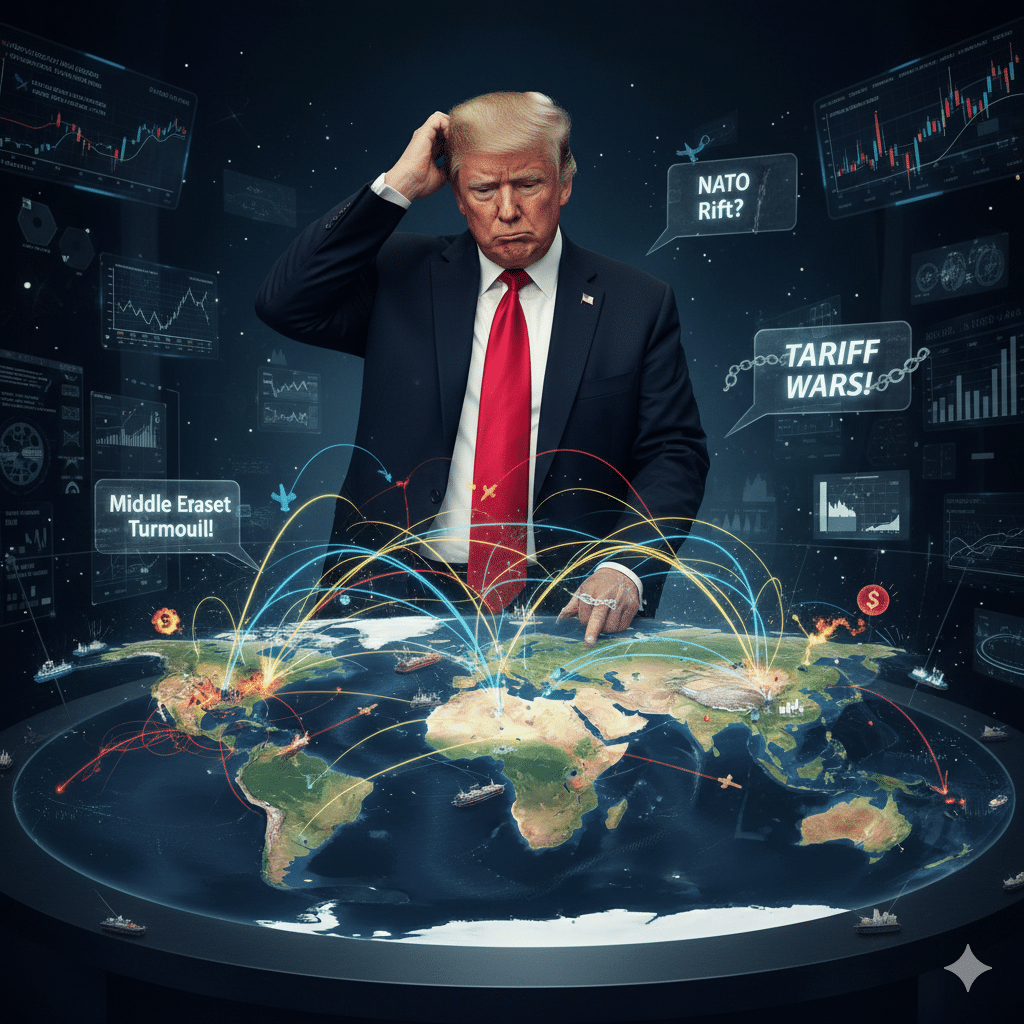
Washington, D.C. — The international order is being shaken in ways unseen since the end of the Cold War. From the Middle East to the Pacific, long-standing alliances are fraying, new coalitions are taking shape, and smaller regional conflicts are threatening to spill over into global crises. For the United States, the challenge is not just to protect its influence but to adapt to a world where a rising India has become central to both competition and cooperation.
1. The Middle East: Fault Lines Deepen
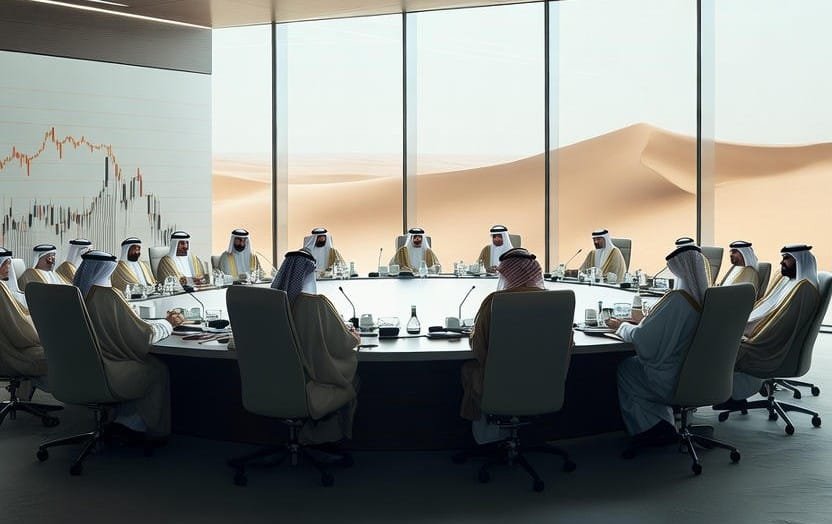
The Middle East remains a critical barometer of American influence, and recent developments suggest that the region is slipping from Washington’s grasp. In September 2025, Israel’s strike on Qatar — a nation that hosts major U.S. military bases — sent shockwaves through regional politics. The attack raised uncomfortable questions about America’s ability to guarantee security for its partners.
The Gulf Cooperation Council (GCC), once heavily reliant on U.S. defense umbrellas, is moving toward self-reliance. Saudi Arabia’s unexpected defense pact with Pakistan signals a willingness to explore partnerships outside the Western orbit. Meanwhile, the United Arab Emirates is reassessing its once-trumpeted ties with Israel, caught between regional pressure and its commitments under the Abraham Accords.
For Washington, the risk is clear: if Gulf nations chart their own paths without factoring in U.S. priorities, America’s influence over one of the world’s most vital energy and trade corridors could erode significantly.
Ad Placeholder #2
2. The Palestine Question: A Diplomatic Earthquake
The war in Gaza has triggered an extraordinary diplomatic realignment. In September, traditional U.S. allies like the United Kingdom, France, and Canada broke ranks by recognizing Palestine. Their decisions followed growing momentum at the United Nations, where over 150 countries now support Palestinian statehood.
This wave of recognition challenges Israel’s standing and complicates America’s traditional role as chief mediator. For Washington, the problem is two-fold: balancing its long-standing support for Israel while maintaining credibility with a global majority that increasingly demands justice for Palestine.
If handled poorly, this moment could fracture NATO unity, deepen skepticism about U.S. impartiality, and reduce America’s influence in peace processes across the Middle East.
3. Economic Rivalries: Tariffs, Technology, and India
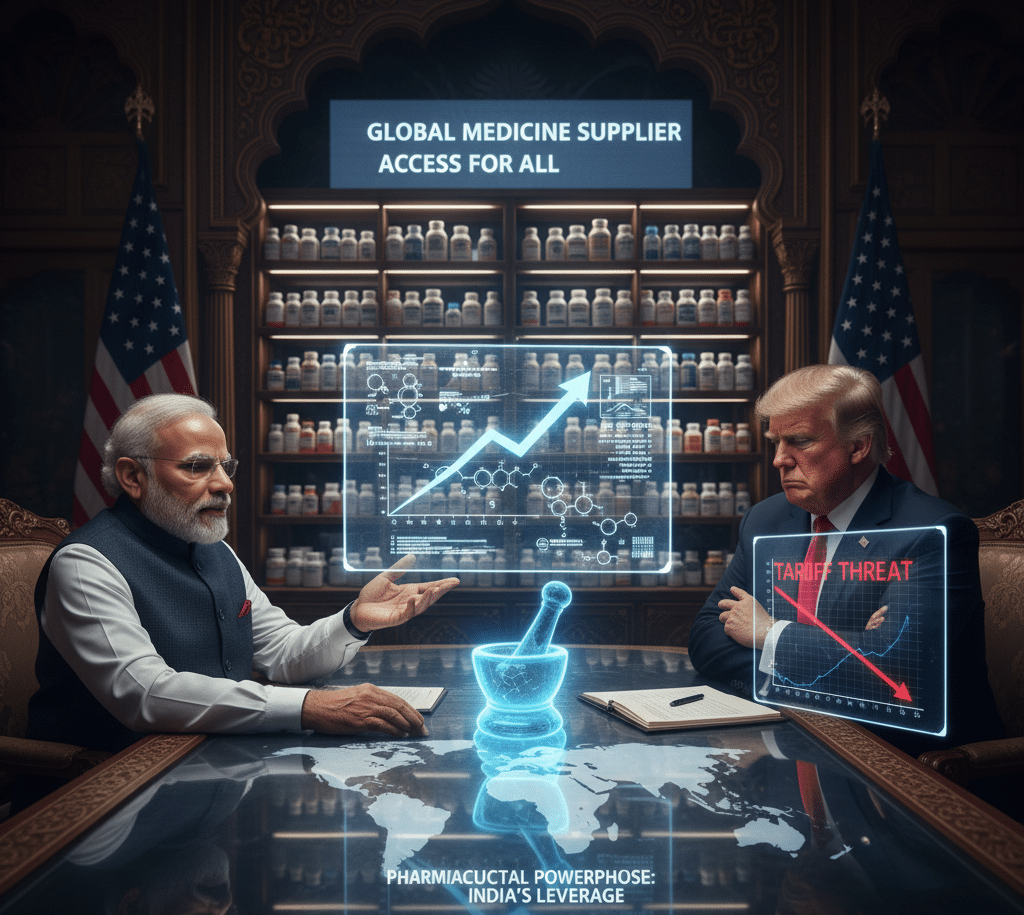
While the Middle East simmers, a different kind of war is unfolding — one fought not with missiles but with tariffs and trade restrictions. The United States recently imposed sweeping duties on Indian pharmaceutical and IT exports, with drug imports facing tariffs of up to 100 percent. The move is designed to protect U.S. industries and secure supply chains, but it risks straining ties with one of America’s most important partners in Asia.
India’s pharmaceutical industry — valued at nearly $10 billion in U.S. exports — is a global leader in affordable medicines. Tariffs could spark retaliatory measures, complicating not only trade flows but also joint innovation in critical health sectors. Similarly, visa restrictions and technology-related trade barriers are putting stress on India’s IT sector, a pillar of its global economic clout.
Beyond bilateral tensions, these moves accelerate a global trend: countries diversifying supply chains away from U.S. control and embracing financial systems that reduce dependence on the dollar. For Washington, the challenge is to balance domestic economic priorities with the strategic imperative of keeping India close in the larger contest with China.
4. South Asia in Turmoil: India as the Anchor
Closer to home, India faces an unstable neighborhood. Pakistan’s economy is in freefall, its political institutions under severe stress, and militant activity on the rise. Bangladesh is struggling with political unrest and refugee flows, while Myanmar remains mired in civil conflict. Afghanistan, still volatile after the U.S. withdrawal, continues to generate instability that spills across borders.
Amid this turbulence, India has emerged as the stabilizer. It has strengthened border management, provided economic aid to smaller neighbors, and positioned itself as a mediator in regional disputes. For Washington, India’s role as an anchor in South Asia is invaluable. A strong and stable India not only prevents regional crises from spiraling but also provides the U.S. with a reliable partner in its Indo-Pacific strategy.
5. Asia-Pacific Chessboard: India, China, and the U.S.
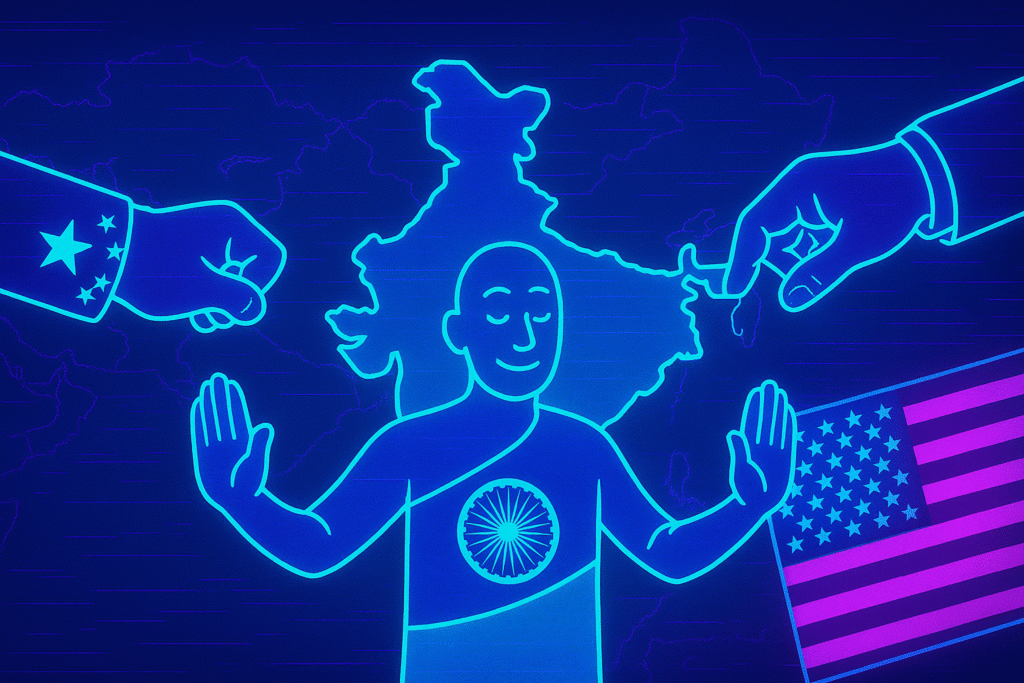
The Indo-Pacific has become the primary arena of great-power competition. China’s assertiveness — from military posturing along the Himalayan border to economic coercion in the South China Sea — is forcing countries to recalibrate their strategies. India, with its vast market and growing military capabilities, sits at the center of this recalibration.
Border clashes, trade rivalries, and tech competition have heightened India’s mistrust of Beijing. At the same time, New Delhi is hedging its bets by keeping open lines with Russia and even cautiously engaging China when it suits its interests. India’s participation in organizations like the Shanghai Cooperation Organisation (SCO) underscores its preference for a multipolar Asia rather than alignment under any single superpower.
For the U.S., this creates both opportunities and risks. India is indispensable in countering China’s rise, but economic frictions and differing foreign policy priorities could limit cooperation unless carefully managed.
6. Emerging Conflicts on the Horizon
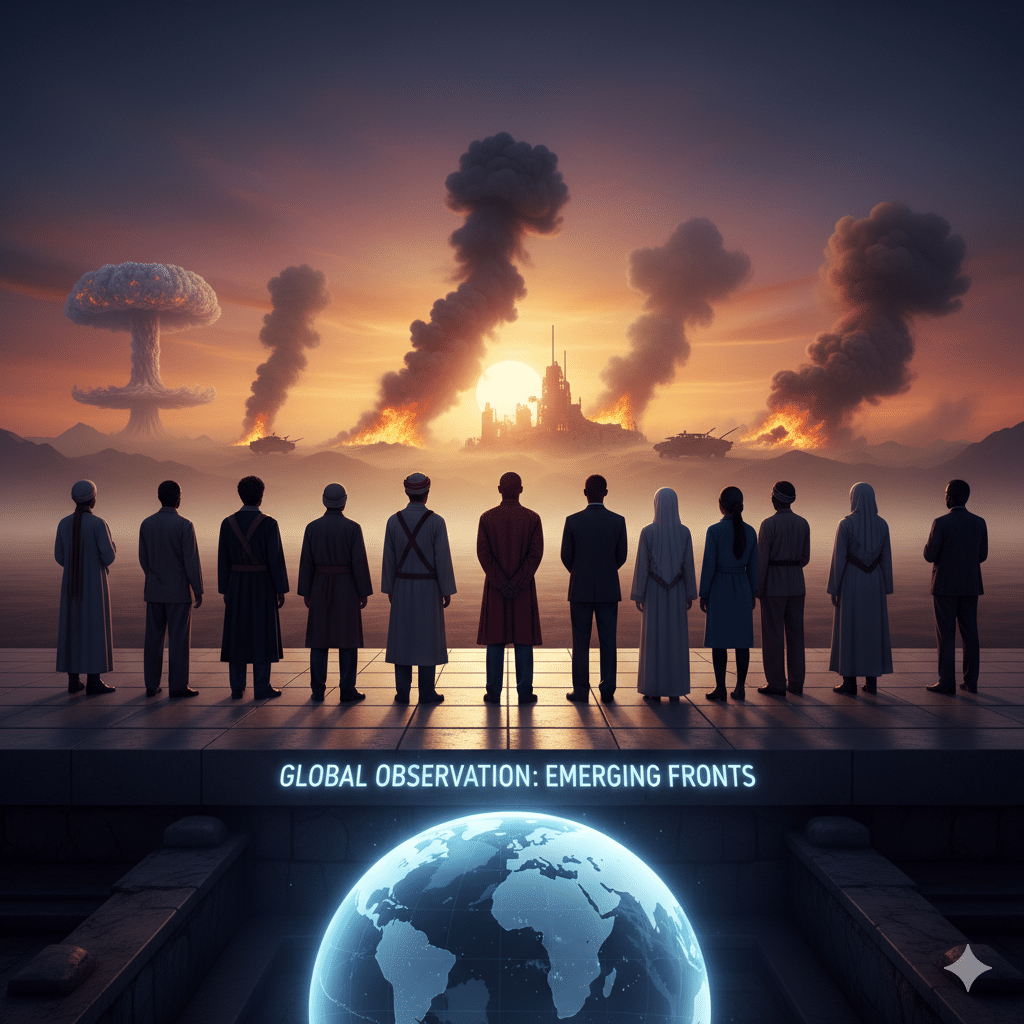
Looking ahead, several potential flashpoints could reshape global dynamics:
- Middle East Rivalries: New Gulf defense partnerships, particularly involving Pakistan, could put regional states on a collision course with Israel or Iran.
- South Asia Tensions: Political collapse in Pakistan or refugee crises from Bangladesh could trigger cross-border conflicts with broader implications.
- Economic Showdowns: Tariff wars and supply chain disputes risk destabilizing global markets and pushing nations toward parallel financial systems.
- Tech Competition: Artificial intelligence, biotechnology, and semiconductors will increasingly define not just economic leadership but also national security.
Ad Placeholder #3
8. Why India Matters to America
The Next World Order: What Comes After
In this shifting environment, four trends are becoming clear:
- Flexible Alliances: Nations are prioritizing issue-based cooperation over rigid Cold War-style blocs.
- Economic Weapons: Trade and tariffs are being deployed as tools of influence, rivaling traditional military power.
- Technological Sovereignty: Countries are racing to secure control over next-generation technologies, creating new divides.
- Regional Defense Pacts: From the Gulf to Asia, nations are forging localized security arrangements that reduce reliance on NATO or U.S. guarantees.
For the United States, India is no longer just a “partner of convenience.” It is a strategic necessity. India’s geographic position, growing economy, and ability to stabilize volatile regions make it indispensable for U.S. interests. Whether it is countering China, ensuring open trade routes, or collaborating on technology, India’s role is expanding.
If Washington deepens ties with New Delhi — while managing disputes over trade and tariffs — it can strengthen its position in both Asia and the wider global order. If it fails, India may drift closer to rival coalitions, leaving the U.S. with fewer options in a world of increasing instability.
Conclusion
The global order is at a crossroads. Alliances that once seemed permanent are fraying, while new partnerships are being forged at an astonishing pace. For Americans, the stakes are high: energy security, economic stability, and the ability to counter rising powers all hinge on how Washington responds.
At the heart of this turbulent era stands India. Its choices will not only shape the balance of power in Asia but also influence whether the United States can adapt to a world where power is more diffuse, alliances more flexible, and challenges more complex. Engaging India fully, fairly, and strategically may be the single most important step America can take to navigate the uncertainties of the 21st century.
Related Posts
- Where to Invest in a Fractured World A 2025–2030 Strategy
Where to Invest in a Fractured World A 2025–2030 Strategy In a world that’s increasingly…
- Global power struggles and who’s set to dominate by 2030
Same Game, New Players: How 2025 Mirrors 1925 in Global Power Struggles — and Who’s…